

5 years ago, I tried to teach myself how to code.
I used a course on Udemy about python to get an overview over coding and build the fundamentals. Then, I advanced into a project, where I built my first Jarvis bot. But after that, I had no idea about what I should learn next and I got complacent.
One follow along tutorial here, one LeetCode problem there, but my momentum slowed down and eventually stopped completely. And here comes the book ,,Ultralearning” by Scott Young (just a regular guy, who completed the entire MIT computer science course in 12 months, nothing special…) into the game.
If I had known what I know now after reading the book, I would have continued to improve my skills in coding and would probably be a top-tier programmer by now.
But I can’t change my past. So instead, I’m giving YOU the exact system I wish I’d had, so you can master any skill 10x faster than I did.
Whether it’s:
- Becoming the Number 1 student in your class
- Master negotiation
- Become a top-tier programmer or AI-Architect
In nowadays fast-changing world, learning new skills as quickly as possible is crucial to stay competitive. Think about what you could do, if you master one specific area, like developing voice agents or copywriting landing pages, in less than one year. How much would you benefit?
But what exactly is ultralearning?
Ultralearning is intense and self-directed learning, which is designed to give you a full structured system to master any skill or area, whether it is to learn how to program with React, how to become the number one sales person in your company or how to build your personal brand. This system is not about the quick motivation spike you will feel when starting a new learning project, but it is about a fully planned step-by-step methodology with different components to master anything as fast as possible.
Without further introduction, here are the 9 essential components:
Number 1: Metalearning: Create your learning map
The first component, Metalearning, is all about planning your whole learning journey. Look, I know you want to START now and not ,,waste” your time with planning or stuff like that. But trust me, stay with me and you will get a big return for the time you invested. I skipped this step when I started to learn coding and as you read, I later regretted it!

This step is crucial to develop a structured way to your end goal. It is so important, that at least 10% of your whole time you set aside for this ultralearning project goes into planning. Here you can get inspiration from books, courses or actual experts in this field.
Try to speak with at least 1 expert in this area and try to fully understand the whole picture. Identify the main principles that are crucial in this area.
Lets take full stack development for example: You should identify, what the main topics are, like HTML, CSS, JavaScript in the frontend, APIs for the Communication and Nodejs, SQL, Databases in the backend. One main principle here is the differentiation between frontend and backend and the communication between them. It wouldn’t be advisable to focus on something like transactions in SQL, when you don’t even know how the communication between frontend and backend works.
Here is a important framework for this step: the Why, What, How Framework:
- Why: Are you learning for instrumental reasons (career advancement, like your internships) or intrinsic reasons (passion project)? I don’t have to tell you that intrinsic reasons are ten times more powerful than instrumental reasons.
- What: Break down everything you want to learn into three categories: Concepts (things you have to understand), Facts (things you have to memorize) and Procedures (things you have to practice)
- How: For everything you want to learn, break down how you will learn it. Will you use a book or a course for the fundamentals of full stack development, will you use LeetCode to practice the coding languages and problem solving and so on…. Ask experts ( for example from LinkedIn or local events) or reverse engineer other successful people.
If you don’t find experts or materials, a great source for planning is also our friend ChatGPT or Claude 🙂
Here are 2 example prompts you can insert into chatgpt:
- Create your full personalized learning map:“I want to learn [SKILL, e.g., “Next.js full-stack development”] in [TIMEFRAME, e.g., “3 months”].Create a structured learning map using the Why/What/How framework:
- WHY: Suggest if this is best for career advancement, passion project, or specific goal like [YOUR GOAL].
- WHAT: Break into Concepts (understand), Facts (memorize), Procedures (practice).
- HOW: Recommend top 3 resources per category (books/courses/projects) with time estimates.
- Concepts: REST APIs (2 weeks, freeCodeCamp)
- Facts: Next.js file conventions (1 week, official docs)
- Procedures: Build e-commerce site (4 weeks, follow this tutorial)
- Find the core principles and reverse-engineer expert paths:“I’m learning [SKILL]. What are the 5 core principles I MUST master first?For each:
- Why it’s foundational
- What breaks if I skip it
- How to learn it (1-2 resources)
Number 2: Focus: Set Time Blocks for Deep Work
Ultralearners are obsessed with focusing on one thing at a time. But don’t get it wrong, because learning is a very mentally demanding task, you will likely not experience the ,,flow state”, where everything will go smoothly. Rather, you will experience the urge to do other things, like scrolling on Instagram or binge watch your favorite Netflix series.

This will likely occur, because learning something new is often way outside your comfort zone. But if this urge occurs, breathe in for 5 seconds, ask yourself if you really want to open Instagram and spend 30 minutes on scrolling through an energy-consuming feed. The problem is, when you give in, it will be harder to continue with learning, because your dopamine receptors will be fried.
Before you start your week, plan the time blocks where you want to focus on your learning journey. Use the 80/20 rule to concentrate on the critical components with the highest leverage and practice/learning more about them. Also, shortly before a deep learning time block starts, have a short routine, like visualizing the next effective 90 minutes or write down the goal for the next 90 minutes. Also a quick meditation practice can help to further advance your ability to focus.
Try to block all the distractions, like enabling plane mode on your mobile phone, tell your roommates that you are not available for the next 90 minutes and clean your desk, so nothing will appear, that will drain your full focus.
Important disclaimer: for intense tasks, a fully focused mind will be best, but for more creative work, a diffuse mind will give you the best creative performance.
3. Directness: Learn by Doing the real thing
I know it seems more enjoyable to just focus on the theory and reading, listening or talking about it. I loved to just do some python LeetCode problems(of course only the easy ones, because the other ones were outside my comfort zone).
But the real growth will appear, when you put your theory into real practice. It sounds nice to practice LeetCode problems, but they wont really benefit you, if you don’t invest the time into building real projects. Practicing identifying the biggest number in an array with JavaScript sounds interesting, but focus more on the practical projects, like simply building an to-do list or a landing page for a local business.
Use the Direct-Then-Drill Approach
- Practice the skill in a real context like building a simple todo list
- Identify what breaks or what is really difficult for you
- Isolate these components and drill them. If you recognize, that you have the biggest problem while styling the todo component with CSS, then look for CSS drills (ask ChatGPT or use iCodeThis)
- Return to the project with your new skillset.
Number 4: Drill: Attack your weakest points

Now don’t get the overall concept of drills wrong. You don’t have to practice what you are already good at. You have to practice where you really suck at. And this is not fun, trust me. After I coded my first website, I understood that I really suck at designing the components with CSS. So what should I do?
I researched the best tools to improve my design capabilities, where I found iCodeThis and used it to practice styling HTML components over and over again. Now, I can say that I am not an expert( or advanced), but I don’t suck as hard as the first time.
Here are the 4 specific drill types you should consider:
- Time-slicing: Practice one component repeatedly in isolation, like designing a button
- Copycat: Copy expert techniques exactly before adapting. Are these techniques fitting you? Are they really worth it?
- Prerequisite chaining: Master the foundational skills first
- Magnifying glass: Zoom in on your weakest link
Identify, what is the biggest factor that is slowing you and your progress down, and practice that.
Then, repeat these drills with purpose, not mindless reps!
Number 5: Retrieval: Test yourself instead of rereading
After you have finished a lection or read a chapter of the book, test yourself about the content. It is scientifically proven, that active recall beats rereading a chapter or rewatching a video every time, because you show your brain, that what you just learned is important.
And I get it, binge watching youtube videos because you tell yourself, you ,,consume content to improve” sounds nice and feels productive, but 90% of the stuff you heard/watched, you will never remember afterwards. I love watching video after video on how to change your life, but after 1 hour, I often realize I just spend 1 hour without any benefit. It feels like productive procrastination.
Here are some of the retrieval methods from the book:
- Flashcards
- Free recall(close the book and write down what you remember)
- Question-book method(generate your own questions about the chapter, video)
- Self-generated challenges/Closed-Book learning (build projects without the help of anything)
For example if you are learning/using a new framework, try to build without using the documentation. Force yourself to recall the patterns! Or if you have completed a youtube video on How to improve your life in the next 90 days, ask yourself, what specific methods or tips you have learned and write them down. Then, brainstorm which of these tips you want to implement in your day to day life.
Number 6: Feedback: Seek Sharp, Useful Feedback
Qualitative feedback can be your biggest leverage, when it is useful to you. Let’s say you created the to do list with React, then let someone overview it and give you feedback. What could you have done differently, how could you improve the project in the future. How could you structure your codebase better?

Here are the 3 different types of feedback:
- Outcome feedback: The feedback tells you, that you are wrong, but you don’t know why. For example: ,,You failed the test”
- Informational feedback: The feedback tells you, what is wrong, but not how to fix it. For example: ,, 12+18 = 31 wrong → 30”
- Corrective feedback: This feedback tells you what specifically is wrong and how you could change it the next time to get it right.
In order to get high-quality feedback, find someone who is more experienced than you, for example the expert you got consulted from when creating your metalearning plan. Good feedback is for example: “Your component state could be simplified by using useReducer here; see this refactored pattern”.
ChatGPT Prompt:
,, I want you to act as an experienced [ROLE: e.g., “senior software engineer”, “startup mentor”, “writing coach”].
I’ll give you:
- My goal
- The context
- My work/output
Your job is to give honest, expert-level, corrective feedback, not praise. Be specific and concrete.
For your response, follow this structure:
Quick diagnosis (2–3 sentences): What is the overall quality and main issue?What works (max 3 bullets): Only the most important strengths.What doesn’t work and why (5–7 bullets): Focus on the biggest problems, explain the reasoning behind each.Concrete corrections: ◦ Show before/after examples for 2–3 of the most important issues. ◦ Provide improved versions of my code/text/structure.Priority action plan (3–5 steps): What I should do next to improve this piece and my skill in general.One drill: Suggest one short practice exercise I can do to systematically fix my main weakness.
- Quick diagnosis (2–3 sentences): What is the overall quality and main issue?
- What works (max 3 bullets): Only the most important strengths.
- What doesn’t work and why (5–7 bullets): Focus on the biggest problems, explain the reasoning behind each.
- Concrete corrections:
- Show before/after examples for 2–3 of the most important issues.
- Provide improved versions of my code/text/structure.
- Priority action plan (3–5 steps): What I should do next to improve this piece and my skill in general.
- One drill: Suggest one short practice exercise I can do to systematically fix my main weakness.
Here is my goal:
[Describe your goal in 1–2 sentences]
Here is the context:
[Explain where this will be used, level of audience, constraints, etc.]
Here is my work/output:
[Paste your code, text, design description, plan, etc.]”
Number 7: Retention: How to remember everything you learned
Everyone of us knows the feeling when you putted hard work into learning a new skill and all of a sudden, after you did not use this skill for a long time, you forgot everything. This is f*cking frustrating!

The best way to fight against this forgetting curve is to use spaced repetition: Revisit material at increasing intervals. This is the fundamental technology behind many of the flashcard-applications like Anki. At the start, the intervals are very short, but after you revisited it for a few times, they become longer and longer over time.
Another good way to fight against the forgetting curve is to practice beyond initial mastery for durability. The more you advance in the skill/topic, the less likely it is to forget about it.
Number 8: Intuition: Build a deep understanding
Before you build up your knowledge, dig deep into the underlying basics. Don’t just memorize how the fundamentals work, but really understand why they work. A good technique is the Feynman technique. Here you explain a concept to a 5 year old. If you can’t explain it simply, you don’t understand it good enough. Strengthen your knowledge there and retry it.
When learning a new concept about a new data structure, try to understand it so good, you can teach it your little sister (although, I do not think she needs to know what the hell a binary tree is).
Here we want to get so good at the skill, that you will do the necessary stuff automatically without even thinking about it.
ChatGPT Prompt:
“I want you to act as a curious 5-year-old child who asks “WHY?” and “How does that work?” about everything.
My goal: Master [CONCEPT/SKILL, e.g., “React hooks” or “REST APIs”] by building deep intuition.
I’ll explain the concept to you in simple terms, like I’m teaching a child. Your job:
- Listen carefully to my explanation
- Ask 5-7 simple questions like a 5-year-old would (”Why?”, “How?”, “What happens if…?”)
- Point out gaps – tell me exactly where my explanation is confusing, incomplete, or wrong
- Rate my explanation (1-10) on clarity for a child
- Rewrite my explanation in even simpler terms to show what I should have said
After I simplify based on your feedback, repeat the process until I can explain it perfectly.
Here’s my explanation of [CONCEPT]:
[PASTE YOUR EXPLANATION HERE – try to explain in 3-5 simple sentences as if to a child]”
Number 9: Experimentation: Explore Outside Your Comfort Zone
This last component ties everything together. Here, you will focus solely on the practical application of your knowledge. Step outside your comfort and embrace discomfort while you learn through trial and error.
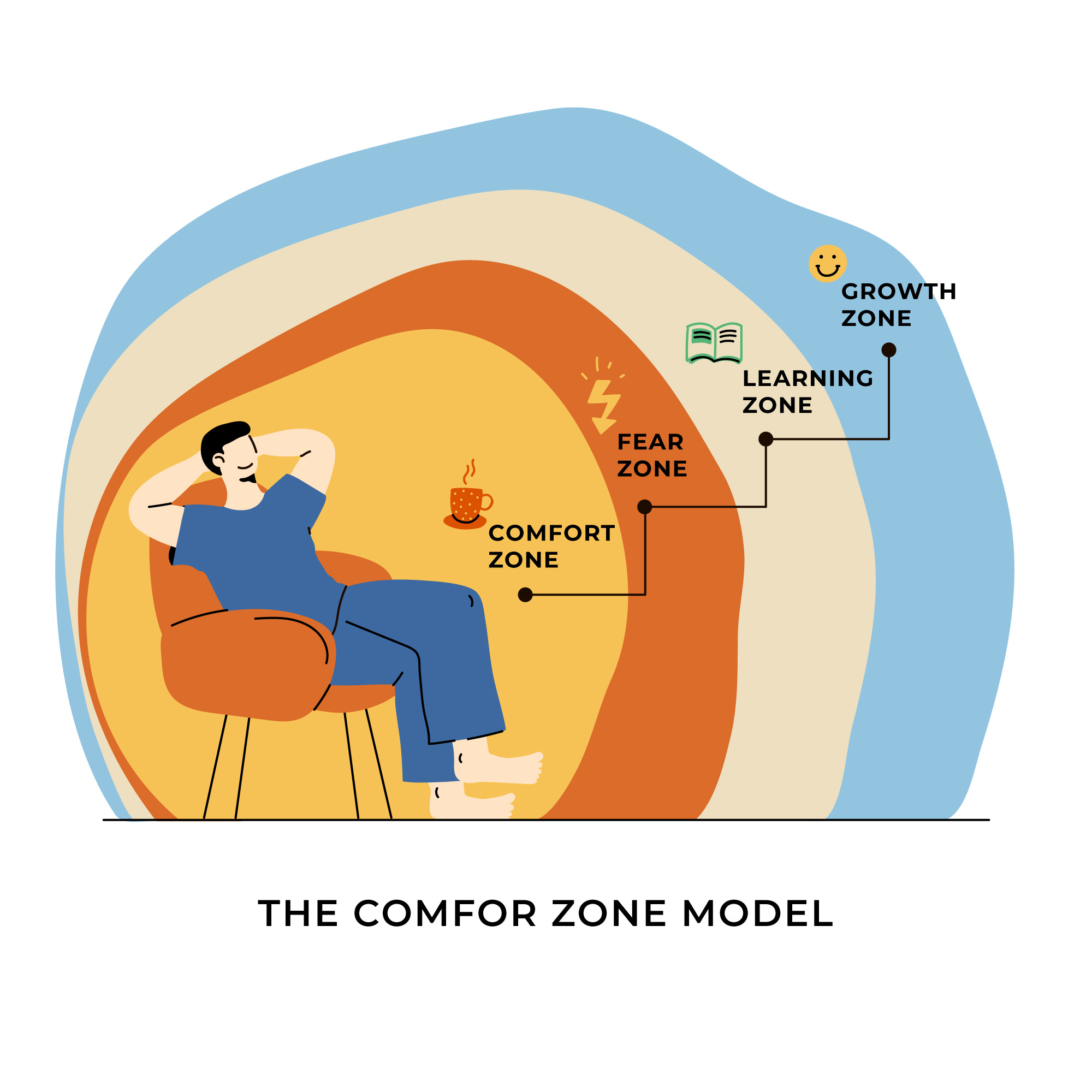
Lets say you learned how to use react, now you can advance with next.js or react native through trial and error. Trial and error is the recommended approach when it comes to choosing which skill you want to focus on next, because you get directly into practice and see, which skill you prefer. It is not easy to experiment with new skills, because you will suck at it the first time.
You will make simple mistakes that experienced people, who have acquired this skill, will laugh at. But this is by far better than completing one course after another while never going into practice. Knowledge is not power, but applied knowledge is.
These were the 9 principles from the book ,,Ultralearning” by Scott Young. But if you just learn one simple framework, learn this: the direct-then-drill cycle:
- Do the real thing
- Find your weak points
- Isolate these weak points and drill them
- Return to the real application and continue
Common Mistakes you should avoid in your ultralearning journey
- Focusing on drilling at the expense of the real practice: 70-80% of your learning time you should focus on the real practice and only the last 20-30% on drills
- Ignoring feedback: While feedback is necessary for growth, it is also very uncomfortable to get critique. As I write this article, I also get feedback from my intelligent friend (Shootout to ChatGPT). who reviewed this article and told me a lot of grammar mistakes and other things I can improve. And although I hate to accept that this article is not top notch, I have to admit that this feedback will help me become a better writer and communicator.
- Trying to learn passively: It feels good to listen to audiobooks or podcasts and tell yourself, that you are currently learning something new, but in reality, it only works with real focus on the material, feedback and experimentation.
- Skipping the metalearning phase: At first, it sounds very boring to plan the whole thing. Why could I start now and get more done?! Trust me, I had the same mindset and thought, I will just start. But after a week of running in circles and having no idea, what I should learn next to improve my skill, I accepted that maybe planning in the first place will help me way more than the time it takes to plan.
Your Ultralearning Challenge (Start Today)
I’m challenging you to pick ONE skill and apply this system for the next 90 days.
Here’s your action plan:
Week 1: Metalearning
- Choose your skill (negotiation, coding, marketing, whatever)
- Find 1 expert to interview (LinkedIn, local meetups, Twitter DMs)
- Create your Why/What/How breakdown
- Map your learning path (Use the Prompt above)
Week 2-12: Execute the Direct-Then-Drill Cycle
- 70% real practice, 30% isolated drills
- Get feedback weekly (or as soon as possible)
- Test yourself, don’t just consume
- Isolate your weak points and drill them